Thursday, December 8, 2011

Answer: Who was she, and how much did she get?


The questions were: Who was the developer who lost Twain’s investment… Who was the woman who sued him… and ultimately, how much did the developer pay to her to resolve the accusations?

The short answers:  Mark Twain invested overmuch in the charismatic developer / inventor James W. Paige’s typesetting invention and lost all of his investment.    Paige, a fascinating scoundrel if there ever was one, became engaged (maybe) to Jessie Hall, who later sued him for $950,000, which is a lot now and an incredible sum back in 1892.  But the story is so complex that the lawyers eventually signed a statement that discharged the suit with no money changing hands.  

I started with by first finding what Mark Twain’s “financial difficulty” was all about.  The query [Twain financial problems] led to the Wikipedia page about Twain.  Then a bit of reading and it was clear that it was the Paige typesetter.  (Aka the Paige Compositor)

The Paige typesetter (from www.TwainQuotes.com) 

That led me to learn about the Paige typesetter.  As noted on Twain's Wikipedia page, "His technological fascination with the Paige typesetter has often been cited as the ill-fated investment that bankrupted him."  Okay, this is the probably the issue we want to focus on. 

So, I searched on  [Paige Typesetter invention]  and that leads straight to the Twain Quotes Page, a page rich with content, really interesting pull quotes from a number of contemporary resources about Paige, covering all of his foibles and various pecadillos.  

Now... one of the operating principles you have to take on as you do internet research is to check everything.  So I started checking things.  

This page has a bunch of newspaper citations, so this gave me the chance to follow-up and verify that the references were up-to-date and correct.  Sure enough, all the citations checked out.  (Example:  here’s the LA Times archive for one of the citations) Note that you can buy the original article for $2.95.  Similarly, you can check out an article about the law suit (Jessie Hall, an Actress, Claims Big Damages for Blighted Affections)  in the Hartford Courant (June 10, 1892) at   -- oddly here, it’s $3.95 (seems expensive for 244 words…) 

The big search point is that newspaper archives are often a great way to follow up these kinds of trails.  BUT they often need to be searched newspaper-by-newspaper, which often brings up the problem about finding archives of newspapers that might be out-of-print.  You usually need to search for the newspaper, THEN find an online database that has that newspaper.. for the dates that you’re interested in. 

In this case I started with the LATimes.com because I knew that they had searchable archives (through Proquest).  I did that search, found the article, and then used that to spot check the other articles (e.g., the Hartford Courant).  Of course, the NYTimes has a free archive, and a quick search on their archive [ "Jessie Hall" James W. Paige ] (in 1892) leads to a nice article in the New York Times.  Notice that I used double-quote around "Jessie Hall" to avoid the spell-corrector trying to convert "Jessie" into "Jesse."

This is a great search strategy to know:  Use newpaper archives, but know how to find the archives in the first place! 

Wanting to check out everything, I also went to Google Patent search and, armed with the full name “James W. Paige” and knowing he invented a kind of typesetter, I was able to find his original patent, US 547859, "Machine for setting, distributing and justifying type." 

Now we're in the place to answer the questions..  But first, the story in short: 

James Paige took a good deal of Twain’s money and then more-or-less wasted it, losing his investment.

Somewhat later, Paige took an interest in actress Jessie Hall (stage name: Dorothea Lewis) and convinced her to move in with him in Hartford, CT.  Apparently all was not well in Hartford as she later had him charged with assault and battery of her (and her mother).  Then, the way these things go, one week later, Paige and Hall left Hartford for Chicago.  (!)  More disagreements followed and Hall returned to Hartford and filed suit for $800,000 for promising to marry, but then backing out of the deal. 

Just to add a twist, when the case came to trial, it turned out that Jessie Hall had JUST been to that same court for illegally living with another man, Edwin M. Grant. 

It’s a complicated set of lives, and Paige seems to have been quite a guy.  As Twain later wrote about Paige in his autobiography:
 “Paige and I always meet on effusively affectionate terms; and yet he knows perfectly well that if I had his nuts in a steel trap I would shut out all human succor and watch that trap till he died.”    
So… our last question was “And how much was she paid?” 

In the end, the lawsuit against James W. Paige (Case #S-140309) was filed in the Superior Court of Cook County, Illinois. On February 17, 1893, both the attorneys for Paige and Hall signed a document dismissing the case without cost.

I’ve thought about getting a copy of that document.  If you’re interested in this, here’s the Archives records search form for the Cook County Court system.  http://198.173.15.34/?section=RecArchivePage&RecArchivePage=6015

But it’s a $9 minimum + $2.00 for the first page and 50 cents per page after that. 

Search lessons…  

1. Newspaper archives are a wonderful resource for tracking down complex stories, but they're scattered all over, and over are not indexed by Google, so you need to actually use their web sites to search their archives. 

2. Newspapers often charge for access.  Luckily, if you shop around, you can often find less expensive versions of the content. 

Now, was that hard? 

Lots of people got this challenge correct, which is great.  Interestingly, it seems to have taken somewhere between 2.5 minutes and 20 minutes!  

I know that most people consider 10 minutes to be a fairly long task (most search tasks take less time).  But did you find this difficult?  Is search task difficulty the result of just the amount of time you take, or of the number of searches and clicks you have to do to get to the answer?  What's your opinion?  

Search on! 


Wednesday, December 7, 2011

Wednesday Search Challenge (12/7/11): Who was she and how much did she get??

Regular readers of SearchResearch know that we are sober, quiet, and interested in the deeper uses of online research.  One typically doesn't find much that's salacious here.  


But for today's Search Challenge we'll make an exception.  This search is about gossip and somewhat tawdry rumors that we want to run down.  The reason this is interesting to readers today is that it involves Mark Twain and a bit of 19th century scandal mongering. 


As you probably know, Mark Twain suffered from a bit of a financial setback in the middle of his life.  This led to his regular touring shows where he would lecture and generally wax wise about the state of the world.  
Today's search challenge is this: 


Background:  Mark Twain lost much of his money by investing heavily in the development of a very complex device.  The developer was a bit of a scoundrel who not only lost Twain's investment, but was caught up in a series of accusations and counter-accusations with a noted woman.  


Question:  Who was the developer; who was the woman, and ultimately, how much did the developer pay to her to resolve the accusations?  


Image from USPTO of the invention that led to financial setbacks for Twain.  

Friday, December 2, 2011

Did you know.. Weather in Google Maps?

I think I'm going to start a new header in my blog posts  "Did you know..."


Even though I work at Google, I'm still sometimes surprised by features that launch that somehow slipped by me.  


Here's one of them:  You can now turn on the "Weather Layer" in Google Maps.  Just go to the Satellite / Map icon in the upper right corner of the map, roll your mouse over it and a popup layer will appear.  Select "Weather." 
When you do, a bunch of weather icons (current weather) will appear as a layer on the map. Here's one for the current weather on the Big Island of Hawai'i.  


And here, the nice little demo video the Maps people made.  


Glad I finally noticed! 


Search on! 


Thursday, December 1, 2011

Answer: Antarctic Islands and India?

Here's the short answer: 


WHO:  Yves-Joseph de Kerguelen de Trémarec (in 1772) 


WHAT:  Kerguelen Islands, deep in the southern Indian Ocean


WHAT IS CONNECTION WITH INDIA:  Kerguelen's rocks are very similar to ones found in northeast India near the Rajmahal Traps  (those hills I mentioned).  The traps were formed by a geologic hotspot that initially formed in Gondwana.  As the plates shifted over time, the hotspot emitted a series of eruptions that left underwater ridges and plateaus over time.  As the surface shifted, this hotspot gave birth to both the Rajmahal Traps, underwater features like the Ninety East Ridge and the Kerguelen Islands.  


Now, the longer answer... How did I search this one out? 


When I first heard about this problem, all I knew was that the discoverer was 18th century French.  A few searches like [ French privateer island discovery ] I finally found that it was the Kerguelen Islands (after a few false starts--there were, after all, other islands discovered by the French--Réunion, Mayotte, etc.).  


When trying to find out what the connection was between Kerguelen and India I read an article about the Kerguelen Plateau.  That's the microcontinent ("once covered in conifers") that's now underwater 1 - 2 km underwater.  That got me to thinking about possible geological connections between the plateau and the striking ridges in the Indian ocean.  


From there it was a quick search for [ Kerguelen Plateau ] which led me to the Wikipedia article about the plateau.  A bit of reading about the Kerguelen hotspot, a quick finding that the Kerguelen hotspot has produced basaltic lava for about 130 million years and has also produced the Kerguelen IslandsHeard Island, the McDonald Islands, and the Ninetyeast Ridge.  The very last line of that article suggests a connection with India. 


Following a search for [ Kerguelen India hotspot ] leads pretty quickly to a nice article at PhysOrg.com detailing the connection between the two.  Here's my simplified diagram:  
As the plates move around above the hotspot, a line
of volcanoes and basaltic flood plains (what become
plateaus) forms in a line above. 

And as reader Hans pointed out,this is wonderfully documented in the article "Ar(40)/Ar(39) Geochronology of the Rajmahal Basalts, India, and Their Relationship to the Kerguelen Plateau" (J. Petrology, v43, n 4, p 1141-1153, 2002)


Bathymetric map of Indian Ocean (from  SRTM30_plus via Wikipedia).
Note the striking ridge (Ninety East Ridge) pointing nearly due
north from Antarctica to the Bay of Bengal. 


Postscript: I think I the challenge was harder for me than for you!  When I started, I didn't even know where the islands were!  Just figuring out that they were in the Indian Ocean took me 15 minutes.  So when I wrote this question, I gave several people a head start--they cleverly shortcut the whole search problem with a query of  Antarctic Islands India ] which gets you to the Keguelen Islands pretty easily.  Well, as I say, it's an open-internet search challenge. 


But in the next few weeks we'll make the problems a little more difficult--until we're ALL super searchers! 


Search on! 

Wednesday, November 30, 2011

Wednesday Search Challenge (Nov 30, 2011): Antarctic islands and India?


Here’s a tale that I’ve been trying to track down.  Put on your best discoverer’s hat and see if you can figure this one out as well.

I was told that not long after the Seven Years War, a Breton privateer discovered islands near Antarctica that he believed were the headlands of a new and previously undiscovered continent.  That didn’t pan out, but he did find islands  that are somehow related to an entire submerged small continent that was formerly covered in pine trees.  Strangely enough, that watery sub-continent is in turn somehow connected to the large hills near the city of Rajmahal in India.


WHO found WHAT islands, and WHAT IS their connection with India?  

You don't need any particularly tricky search techniques for this, but you do need to be willing to look around and find connections that you might not have thought about.  

Search on! 

Monday, November 28, 2011

Doodles, cool and archived


I saw a really surprising search the other day.  I was watching a school-age kid trying to find one of Google's clever interactive logos. You know, like the one from today celebrating Bob Noyce's 84th birthday.  


You've probably noticed--they're sometimes interactive, they're always celebratory in some way and they have a popup explaining what it's all about.  (I'm showing the popup on the right-hand side of the above image.)  


What you might not know is that if you click on the image on the Google Home Page, it will do an appropriate search for you on that topic.  


What was so interesting about watching this kid search for the Google Archive was that he didn't know they're called "Doodles," so he was fooling around searching with queries like [Google images ] (which won't get you very far because the results are so heavily skewed by Google Images, the search verical).  He tried things like [cool Google images ] before I finally told him to try adding the word "doodle," which of course got him what he wanted.  


Search lesson:  Sometimes you just need the right word to access the right body of information.  The deep trick is knowing which is the right word. 


In this case, the kid might have tried to search for [Google images ] on Images and he would have found all kinds of results, including links to the Google Official Blog, which then has links to the archived Doodles.  


To save YOU the trouble, here are a few links to Google's collection of great Doodles.  


The official Google Doodle archive


The marvelous Doodle ode to Stanislaw Lem 


The Les Paul interactive Doodle (play your own tunes!)


And last, but not least, the video of the famous Charlie Chaplin Doodle.   


Search on!


Changes... always changes to Google products


You probably saw the recent Google blog post about sunsetting different products.  http://googleblog.blogspot.com/2011/11/more-spring-cleaning-out-of-season.html


Here it is in short:   (Remember, this is my personal blog and doesn't represent Google official thoughts, policy or inclinations...) 


1.  Google Bookmark Lists (Dec 19, 2011) -- essentially nobody was using them (I mean, not even was using them, so you know it didn't have much uptake).  Fatal flaw--what user problem was it solving?  Nobody really knows, so it's going away in December.  


2.  Google Friend Connect (Mar 21, 2012) -- being superceded by Google+ features.  


3.  Google Gears (Dec 1, 2011) -- it was a valiant attempt to make Google products work offline as well as online.  But with the advent of HTML 5 (and the various offline features it offers), Gears is rapidly becoming redundant.


4. Search Timeline (Oct, 2011) -- this is unfortunate, as there really isn't anything else quite like it. Yes, you can use Google Insights for some of this function, but the ability to do Timelines over News Archives is just gone.  I'm hunting around for a good replacement for the ability to do this kind of search + charting.  


5. Google Wave (Mar 30, 2012) -- I can't say that I'm sorry about this one being turned down.  In my use of Wave, it was just a giant, unwieldy thing.  Nice idea... but it was too much all in one package.  I want a speedboat, but got a cruise ship.  


6. Google Knol (Oct 1, 2012) -- This too was a great idea--authored Wikipedia style articles.  But it never took off in the way that Wikipedia has, partly because the articles never got enough links to make them show up high in the results.  Sigh.  Unfortunately, Wikipedia is suffering its own set of difficulties.  (Have you tried to add a new article to Wikipedia recently?  See Danny Sullivan's recent rant about this.  He's totally right.  His critique shows the growing problems that Wikipedia is having, and worries me about its future.)  


Moral of this particular story:  As I've been saying for a while, things come, things go.  The good news here is that Google is getting better about letting everyone know about these changes.  You can see the culture change over time.  Used to be that changes just happened without any kind of comment.  People noticed, or they didn't.  


Another kind of change that went unremarked (but I'll tell you) was that there were recently a bunch of changes to the online Dictionary.  When you do the [define: ] operation (such as [define:peruse]) the quality has gone up, primarily in marking typical uses.  While keeping up with shifting definitions is a full-time job, the fact that Google is paying attention to the quality is a great thing.  


But it's one of those things that isn't, from Google's point of view, worth mentioning.  It's just one of the continuous changes that tries to make everything better.  Of course, not every change is 100% improvement for everyone, but the goal (and I think Google pretty much succeeds at this) is to make the majority of people happier and have access to higher quality information.  (For even more information, see Matt Cutts recent post about recent ranking changes or the YouTube video about ranking changes below.)  


If you see something that is clearly worse for you (or better yet, worse for a large number of people), let me know.  The least I can do is to pass your observations along. 


Search on! 


Friday, November 25, 2011

Memories of green lines on the land


There are lines on the landscape that you can’t see easily, lines that mark the memories of stream pathways and old property boundaries, leaving a persistent impression of the past on the surface of today.

We’ve all seen lines of trees before.  Depending on the place, straight tree lines are usually old property boundaries, with the trees marking off the edges of ephemeral property ownership that changes at decade speed, while the trees change at century speed, out of sync with the short / fast / furious lives of those that would use them to mark a bounding box around what they think they temporarily own.   In California there’s been a long-standing tradition of using eucalyptus trees to mark off edges, even though the trees remain long after the human claimants have been returned to the soil as nutrients.   

What’s even more remarkable is that these green lines can be seen through Google Maps.  The aerial images (“Satellite view,” even though many of the images at the scale we’re interested in are actually taken from planes) often reveal the past of a place through the green lines. 
Click on image to see at full size.   

In the above image you can see a long line of trees just below the lake on the left.  That's Felt Lake in the Stanford University foothills.  But those are 60 foot tall eucalyptus trees that used to mark the southern end of the old Stanford farm.  You can pretty clearly see what the boundary was.  That line of housing development crowds right up next to the property line, making a nearly vertical slash through the hills.  

But I’m really more interested in the ways memories of streams persist in the landscape.  Here’s an aerial image of some land in Palo Alto taken in 1948.  The sinuous line of trees running through the photo is Matadero Creek.  The straight line running almost vertically is a railroad track, and you can see that the line of trees following the creek stops at a major highway—in this case it’s El Camino Real, an old road that has been in that location for hundreds of years. 


 From 1948... I pieced these together from Google Earth images in History view mode.   

What captivates me about this is that the tree lines persist for a very long time, even through 50 years of intense development.  As you can see, the line of trees along the creekbed have survived, in a sense, for half a century.  The creek is in a very different setting now; once it enters the industrial park, the stream is completely driven by runoff from acres of asphalt, and no longer fed by trickles from grassy fields. 


This is a recent image.  I’ve highlighted in red the creek once it enters the Stanford industrial park  and flows into suburbia.  It’s really broken only in two places—first when it crosses Foothill Blvd (just before entering the industrial park), and then just a bit later when it was channelized to go beneath the Tibco building (the straight segment in the middle of the industrial park). 

Seeing these images makes me think of how much of a lasting impact we have on the world.  Developers channelize creekbeds, but the lines still persist.  It’s hard to undo that much geography, it’s just incumbent unless you move the entire landform. 

These lines of trees (oaks, mostly) explain something you see from time to time walking through suburbia.  Every so often, there’s a tree that is way out-of-size, something that just seems incongruous with its surround.  If it’s an oak, chances are good that it’s part of a much larger structure—a persisting line of trees that remembers a world before the developers came.

I find this both heartening and sad at the same time.  I feel lucky to have come along at a point in time when one can still see these marks on the land.  At the same time, it’s a bit like finding a palm tree deep in a scrub oak woodland—the marks of people on the land are inescapable, and often woefully out-of-place.  

We cover, we bury, we replant… and still the land manages to persist.  The big oak in the suburbs is an oddity, way out of keeping with the other trees in the area, until you realize that it’s been there for 200 years.  Ultimately, that makes me glad.  I hope the trees win in the end.  

And feeling lucky enough to live in a time when I can see both the trees from the ground and from the air through Google Maps and Google Earth. 

Searching for more trees and more green lines on the land... 

Thursday, November 24, 2011

Answer: What's that flower?

The quick answer is that it's Ithuriel's Spear, aka Wally Basket, aka Grass Nut.


Latin name: Triteleia laxa.

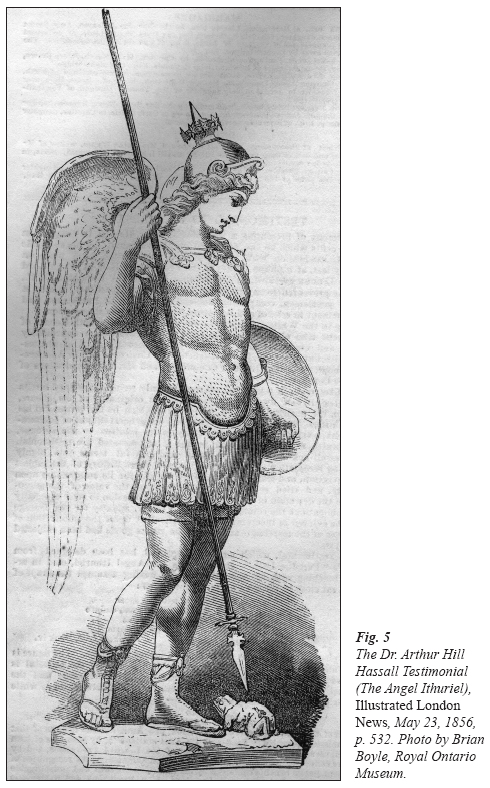
Regular reader Hans nicely provided a link to an illustration of Ithuriel and the spear he used to reveal that the frog he's threatening was actually the devil in disguise.  (Who knew?) 

To solve this challenge... I first looked up where I (were the flower) was.  If you enter the lat/long into Google Maps, 37.1540, -121.4200, you'll find that you're in the middle of Henry Coe State Park. 

Why does this matter?  Because when locating things like wildflowers, birds, animals, insects (etc.) the geo-location matters a great deal.  There are many thousands of blue wildflowers in the world, but your first big clue in figuring out which one it might be is location.  

Once I knew that this flower was in a State Park, I figured that this might be useful in doing my search.  So I did: 


I could have used a search term like "northern california," but I went with Henry Coe because I know that state parks often have volunteer organizations that publish things like collections-of-wildflower-photos.

Once I did that search, I saw that one of the top hits was "Album of Blue Wildflowers from Henry Coe State Park."  

Ah ha!  Since I had a couple of good pictures (see yesterday's challenge page), it was pretty easy to compare with each of the photos in that album.  And, sure enough, the 13th image down is a match.  

But matching flowers based on just an image can be tricky, so I copied the Latin name (Triteleia laxa) and did another search on just that.  


which led me to the Wikipedia page for Triteleia laxa (which wasn't all that helpful, but did give me another image to compare).  It ALSO led me to the Calflora site entry for Tritelia laxa, which IS a great, very authoritative site.  (Why is it authoritative?  Because it links to very well-known herbarium sites such as the Jepson Manual and the USDA plant manual.)  

That pretty much confirmed it for me, but to be triply sure, I ALSO checked the Jepson Manual entry for Triteleia laxa... which was consistent with my field observations about number-of-stames, descriptions of anthers, flower composition, etc.  

A quick search for [ Ithuriel's Spear Milton ] confirmed that the story of Ithuriel's spear and the devil-disguised-as-frog appear in Book IV of Paradise Lost by the 17th century English poet John Milton.  

Search moral:  There are a couple of takeaways.  
1.  When searching for animals, plants, and similar localized things, consider starting your search with a geo-reference.  In this case I used "Henry Coe State Park" -- I could have used something else (even California as a search term would have helped.)  
2.  When looking for a specific flower, you probably need to find images to verify your observation.  If you REALLY want to get into the details, you're going to need to use a wildflower identification key to verify that the flower you're looking at really is what you think it is.  Note that most keys are region specific--be sure the key you're using is for the location the flower is in!  

Search on! 

Wednesday, November 23, 2011

Wednesday Search Challenge: What's that flower? (Nov 23, 2011)


You've probably asked a question like this before:  What's that flower?  


Unless you're botanically inclined, or have a friend who's horticulturally minded, it's often kind of hard to figure these things out... especially for wildflowers that are unrelated to anything you'd see in a domesticated garden.


As you might guess, this happens to me all the time.  

This past March I was out for a leisurely hike at lat/long 37.1540, -121.4200 when I noticed a pretty blue flower.   Here are a couple of pictures so you can get an idea of what I saw.  
It was about 3 feet high and was growing in open grassland--nothing especially odd or strange about where it was growing.  Just along the trail, sticking it's head up 


When I got home I looked it up based on what I saw. 


To make your task slightly easier, I'll tell you that the flowers were blue, but that there were some variation in flower color between the plants.  They were blue, blue-purple, or white.  The flower tube was around 12–25 mm long, with the petals ranging from 8–20 mm in length.  The flowers are cone-shaped and are made up of 6 petals that are fused together at the bottom.  In the flower there are 6 stamens, 3-lobed stigma atop a single triple-chambered ovary.  In the flower,  filaments attached at 2 levels, and the anthers ranged from 2–5 mm.  As you can see, individual flowers were arranged in clusters of 4 - 8 flowers at the end of longish stalk, roughly 100 mm long.   The leaves are long and grass-like in appearance.  


When I figured out what it was, I was surprised to discover was that its common name is the name of a weapon that's used by a particular angel!  (Do angels normally carry weapons??)  


Question:  Can you figure out what the Latin and common names of this flower are?  


For extra credit on this one--be sure to write down HOW you figured this one out, and how long it took you.  I'm curious to see if you find this one hard or very simple.  Let me know! 

Search on!